Lyra
Lyra from NVIDIA: open generative 3D and 4D world models; Verified; 2 variants.
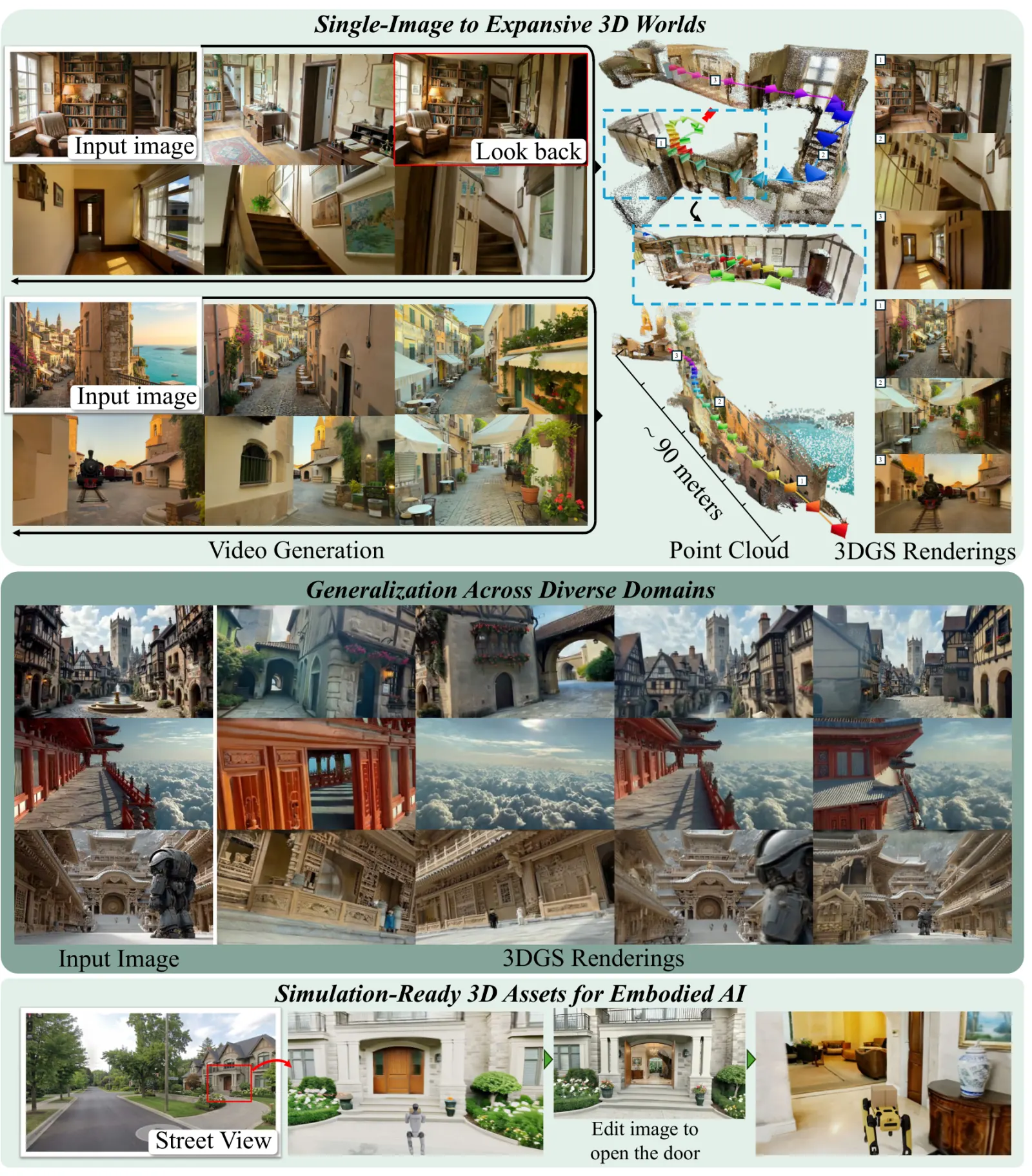
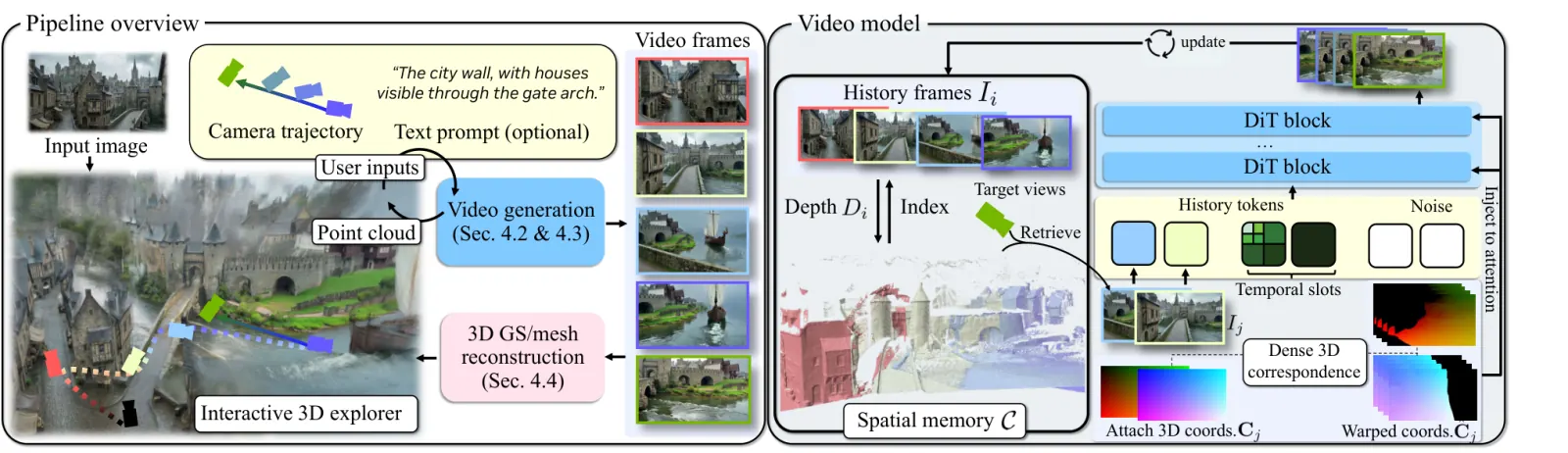
Lyra is NVIDIA's generative world model family for exploration: from an image or video (Lyra-1) or from actions (Lyra-2) it produces an explorable world video. In this catalog both variants run through in-tree pipelines backed by vendored runtime adapters, the default runner targets Lyra-2, and runner status is Verified.
Project page: research.nvidia.com/labs/sil/projects/lyra2. Code: nv-tlabs/lyra.
The paper is Paper. Project page: research.nvidia.com/labs/sil/projects/lyra2. Code: nv-tlabs/lyra.
Build your run
Lyra1Pipelineworldfoundry.pipelines.lyra.pipeline_lyra1official-static-sdgworldfoundry.pipelineworldfoundry-eval run \
lyra-1 \
--pipeline.task-profile official-static-sdg \
--jsonVariants
- StatusVerified
lyra-1image-or-video-to-world-video
Runtime profile
lyra-1Pipeline binding
lyra-1 - StatusVerified
lyra-2action-conditioned-world-video
Runtime profile
lyra-2Pipeline binding
lyra-2
What it is for
Use lyra-1 for catalog world-model inference. Choose it when you need action-conditioned future frames rather than a standalone clip generator.
The catalog records two generations: Lyra-1 for image-or-video-to-world-video and Lyra-2 for action-conditioned world video (paper on OpenReview; project page at NVIDIA Research). Runtime execution requires local Lyra checkpoints, text-encoder assets, DA3 (Depth Anything 3) assets, and CUDA dependencies; internals beyond the recorded structure are not stored in this repository.
Catalog tasks include open generative 3D and 4D world models. Catalog aliases include Project Lyra, Lyra 1.0, and Lyra 2.0. Also recorded: lyra-2.
Recorded evaluation entry points include WorldScore (Standard scoring for explorable generated worlds), CameraBench (Evaluates camera/viewpoint control quality during exploration).
Runtime contract
Optional image, prompt, mode, trajectory, and camera_rotation; artifacts generated_world, generated_3d_asset, and lyra-1.mp4.
CLI task profiles: official-static-sdg and official-zoomgs. WorldFoundry binds LyraPipeline.
Start on lyra-1. The family registers 2 catalog variants (cards above): lyra-1 (image-or-video-to-world-video) — Runner parity pending; lyra-2 (action-conditioned-world-video) — Runner parity pending. Family status: Verified.
Recorded official-zoomgs defaults: fps=16, seed=1.
Pick the variant by input: lyra-1 when you start from an image or video, lyra-2 when you drive the world with actions. The default catalog runner resolves to Lyra-2.
Running in WorldFoundry
Launch worldfoundry-eval run lyra-1 --pipeline.task-profile official-static-sdg to step the world. The command builder above switches --pipeline.task-profile among recorded tasks and still emits worldfoundry-eval run.
Recorded weight repositories include depth-anything/DA3NESTED-GIANT-LARGE-1.1. Prepare the environment and check local assets with bash scripts/inference/prepare_model_infer.sh lyra-1. Add --download to fetch missing public checkpoints.
Status: Verified.