ATI-Wan2.1-14B
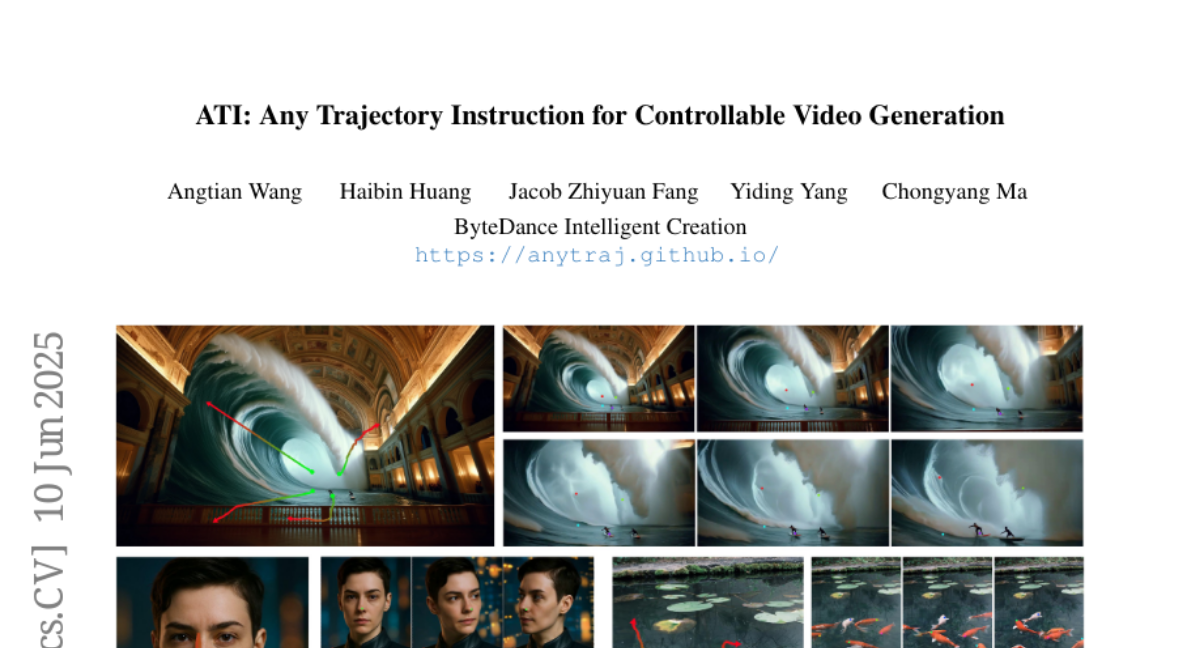
ATI-Wan2.1-14B from ByteDance: camera-controlled-video and image-to-video; Runner parity pending.
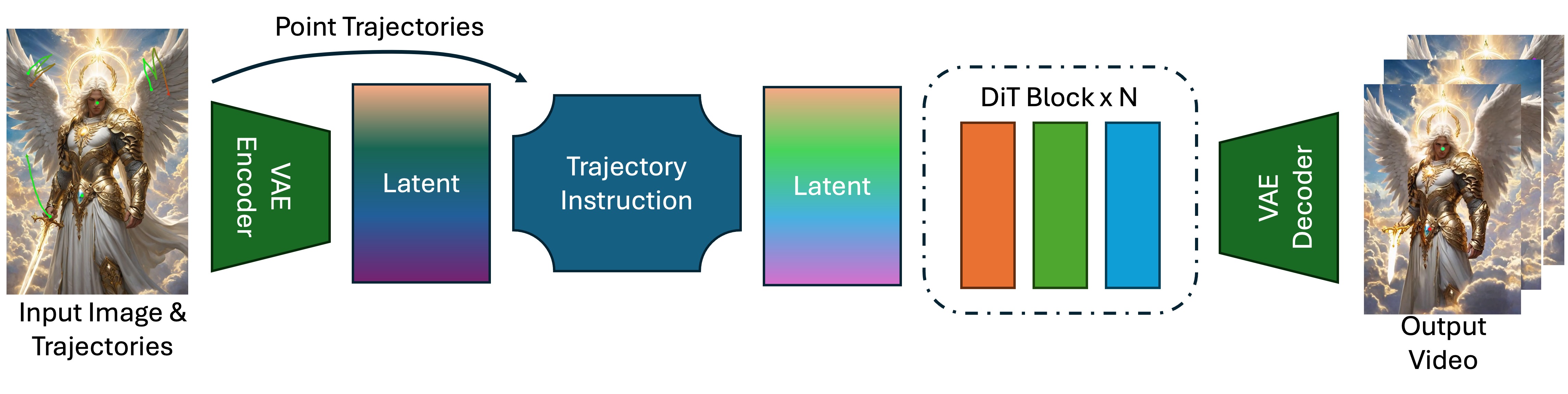
ATI (Any Trajectory Instruction) turns trajectory drawing into video control: draw point trajectories over an input image and the Wan2.1-14B-based model animates objects, camera, or both along them. In this catalog only ATI's official inference delta is vendored — the unchanged Wan2.1 implementation is reused from worldfoundry/base_models.
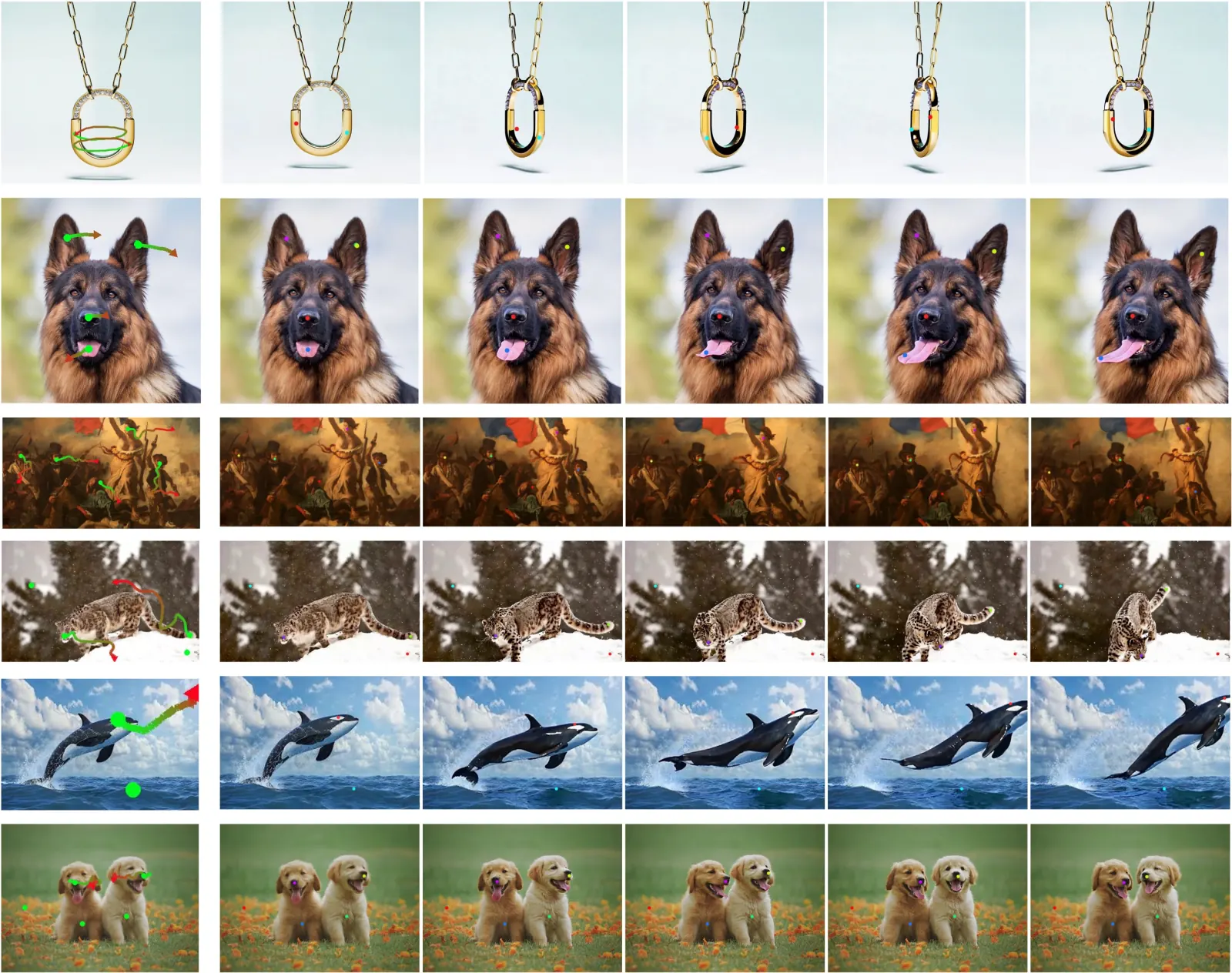
The recorded paper is arXiv 2505.22944.
Code: bytedance/ATI. Code: Wan-Video/Wan2.1.
The official paper is on arXiv 2505.22944. Code: bytedance/ATI. ATI weights: bytedance-research/ATI. Base components: Wan-AI/Wan2.1-I2V-14B-480P. License: apache-2.0.
Build your run
ATIPipelineworldfoundry.pipelines.ati.pipeline_atidefaultworldfoundry.pipelineworldfoundry-eval run \
ati-wan21-14b \
--pipeline.task-profile default \
--jsonWhat it is for
Pick ati-wan21-14b when you need camera-controlled video: a camera trajectory in, a steered clip out. Use it instead of unconstrained T2V when viewpoint must follow a path.
Per the upstream release, ATI injects dense point-track conditioning into the Wan2.1 I2V backbone through a trajectory instruction module. Runtime checkpoint loading builds a read-only union of ATI weights (bytedance-research/ATI) and locally staged Wan2.1 I2V 480P base components. It is published by ByteDance.
Catalog tasks include camera-controlled-video and image-to-video. Documented modalities: image in, video out.
Recorded evaluation entry points include CameraBench (Evaluates trajectory/camera-motion adherence).
Runtime contract
Optional prompt, input_path, interactions, and operator_kwargs; artifacts ati-wan21-14b.mp4.
CLI task profiles: default. WorldFoundry binds ATIPipeline.
Family status: Runner parity pending.
In-tree import and camera-track compilation are verified; full GPU artifact parity requires staged weights. No source checkout or runtime download is permitted — only locally staged checkpoints are resolved. Input schema is prompt, image, and dense point tracks.
Only ATI's official inference delta is vendored; the unchanged Wan2.1 implementation is reused from worldfoundry/base_models.
Checkpoint loading builds a read-only union of ATI weights and locally staged Wan2.1 I2V 480P components. No source checkout and no runtime download. The 14B backbone needs a high-memory GPU; catalog VRAM is unset.
Running in WorldFoundry
Launch worldfoundry-eval run ati-wan21-14b --pipeline.task-profile default to follow the camera path. The command builder above switches --pipeline.task-profile among recorded tasks and still emits worldfoundry-eval run.
It runs in the unified environment worldfoundry-unified-cu128 (Python 3.11, CUDA 12.8).
Recorded weight repositories include bytedance-research/ATI, Wan-AI/Wan2.1-I2V-14B-480P, and bytedance-research/ATI among others. Prepare the environment and check local assets with bash scripts/inference/prepare_model_infer.sh ati-wan21-14b. Add --download to fetch missing public checkpoints.
Status: Runner parity pending.