
MAGI-1
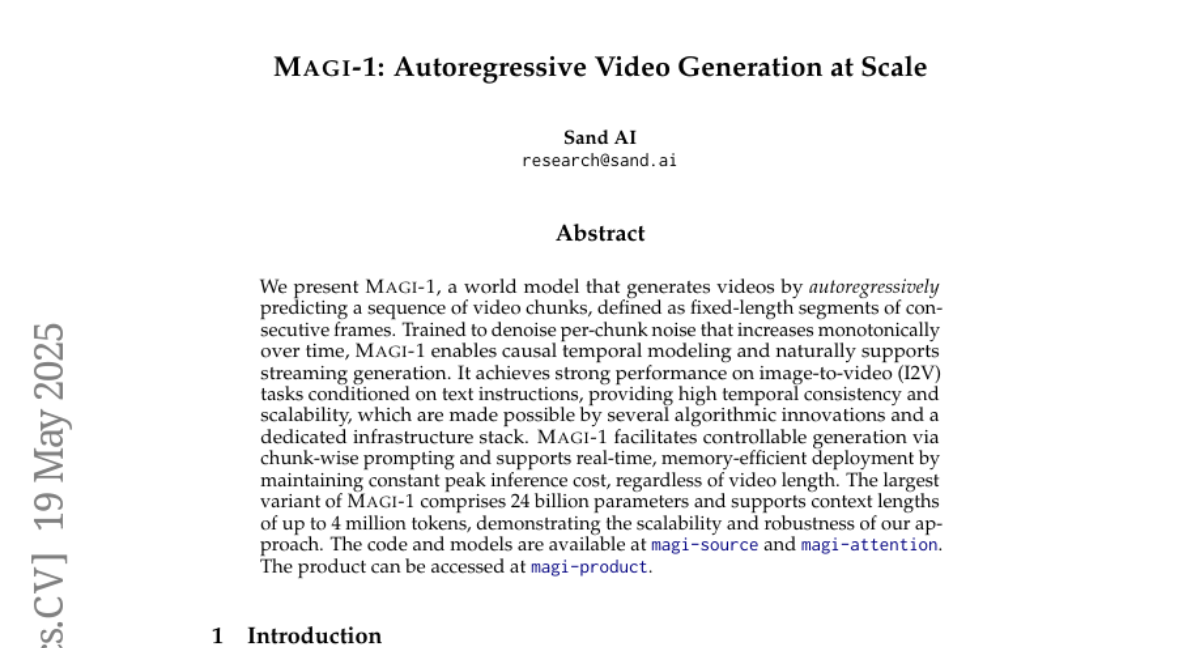
MAGI-1 from Sand AI: image-to-video and video generation; Runner parity pending; dedicated `magi-official-cu124`.
MAGI-1 is Sand AI's open autoregressive video generation model for image-to-video and general video generation, released under Apache-2.0.
Paper: arXiv 2505.13211.
Code: SandAI-org/MAGI-1.
Build your run
MAGI1Pipelineworldfoundry.pipelines.video_official.pipeline_official_videointeractive-videoworldfoundry.pipelinewf run \
magi-1 \
--pipeline.task-profile interactive-video \
--jsonWhat it is for
Use magi-1 to generate a video that starts from a reference image.
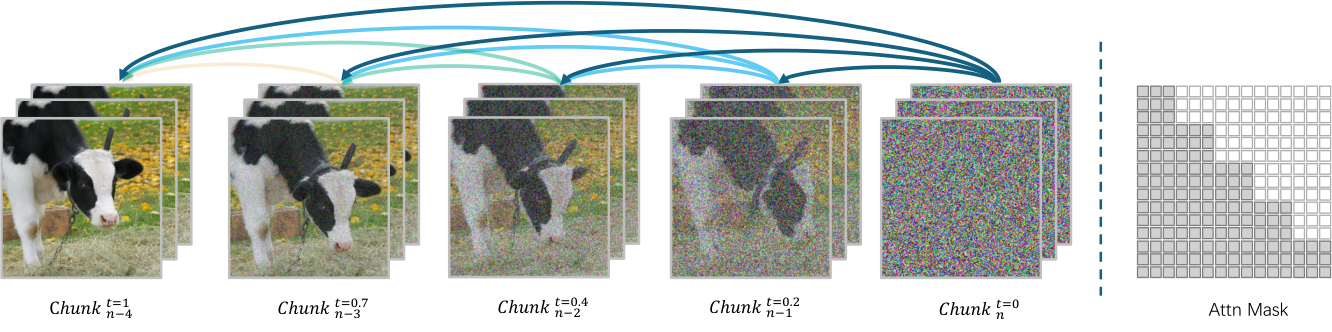
Upstream describes MAGI-1 as a large autoregressive video model generating chunk-by-chunk with causal attention, enabling streaming-style continuation. WorldFoundry takes a prompt and an input image and writes a generated_video artifact.
Tasks: image-to-video and video generation. Modalities: image in, video out.
Suggested benchmarks: VBench (Baseline video generation quality suite).
Runtime contract
Inputs prompt and input-path (bundled samples are used when omitted); artifacts magi-1.mp4.
CLI task profiles: interactive-video. WorldFoundry binds MAGI1Pipeline.
Family status: Runner parity pending.
Stage the sand-ai/MAGI-1 weights before running.
Generated output has not yet been validated on GPU with the released checkpoint.
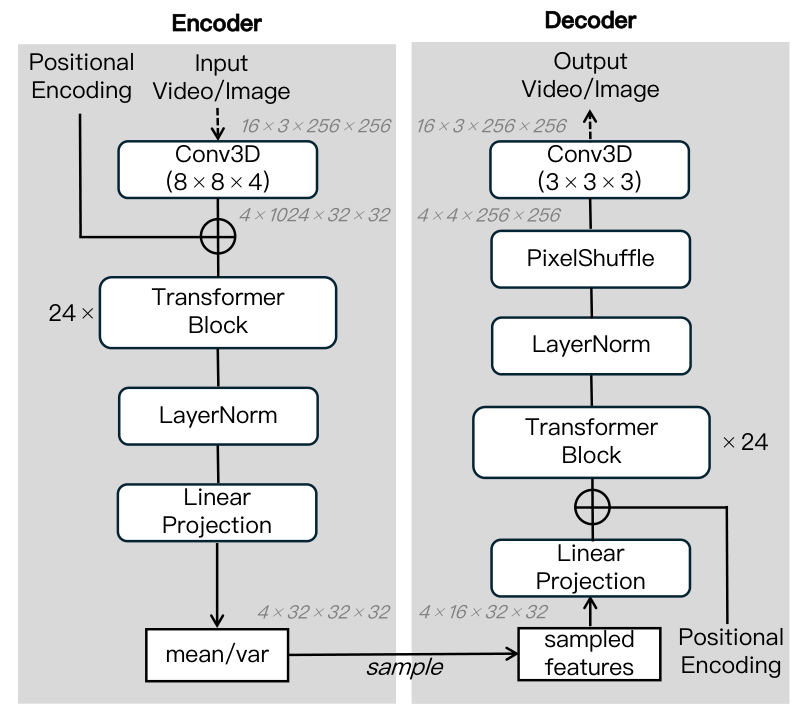
The MAGI-1 image-to-video route uses the official example image and config, the local sand-ai/MAGI-1 checkpoint with the 4.5B distill profile, and exposes sampling controls, fps, and seed.
Running in WorldFoundry
Animate a still image with wf run magi-1 --pipeline.task-profile interactive-video.
It runs in the dedicated environment magi-official-cu124 (Python 3.10.12, CUDA 12.4).
Weights come from sand-ai/MAGI-1. Prepare the environment and check local assets with bash scripts/inference/prepare_model_infer.sh magi-1. Add --download to fetch missing public checkpoints.
License: Apache-2.0.